-
Free delivery from £70 for the United Kingdom | Same-day shipping on orders placed before 1pm*
-
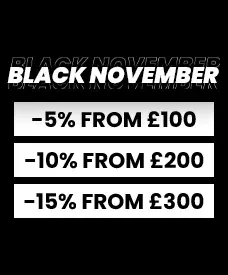
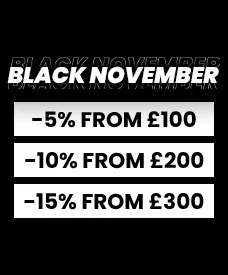
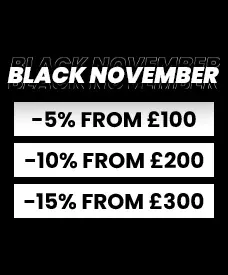
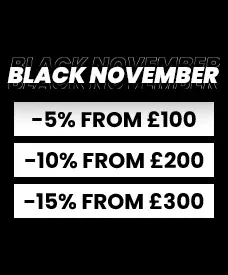
Black November: 5% off from £100, 10% off from £200 and 15% off from £300 on the entire store until 9 november (Excluding discounted products, Therm-A-Rest, MSR, Stoots, Big Agnes, Santa Madre & Nemo)
ÖKO vs Katadyn BeFree: Which Is the Best Filter Water Bottle?
In the outdoors, the goal is simple: reliable water, fast, without complications. For drinking, but also for rehydrating a freeze-dried meal at camp or filling a soft flask on a trail run. Two models come up constantly: ÖKO (pressure + adsorption) and Katadyn BeFree (hollow fibre, ultra lightweight). The "best" depends above all on your use case.
Filtration: two different approaches
ÖKO
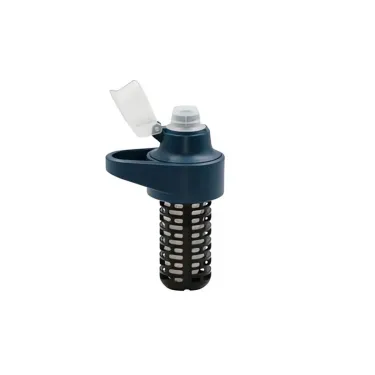
It combines a broader mechanical filtration (around 1.25 microns) with an electro-adsorption and carbon stage. The advantage: very comfortable use and a wider reduction promise (taste/odours, chlorine and certain pollutants, and even "certain viruses" according to the brand). ÖKO also recommends, in some scenarios involving very doubtful water, supplementing with purification tablets.
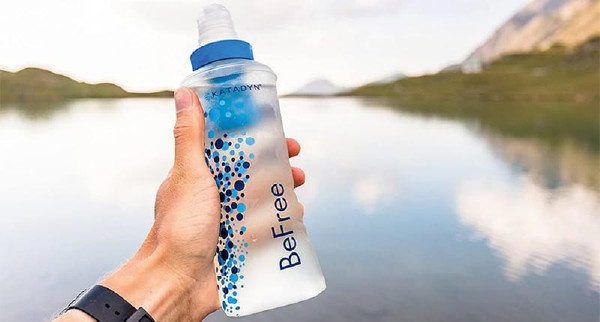
Katadyn BeFree
It relies on a fine mechanical barrier (0.1 micron): it is designed to filter bacteria, protozoa/cysts, and sediment. This covers the typical requirements for hiking in Europe (springs, streams, lakes). However, viruses can be much smaller (e.g. norovirus at around 0.027–0.035 micron), so 0.1-micron filtration alone does not guarantee virus protection in all contexts. When viral risk is high (travel, highly uncertain water), a supplementary treatment (chemical/UV) must be added.
Flow rate and comfort: which is more pleasant for everyday use?
ÖKO
It is generally seen as the most pleasant option if the goal is to "drink like with a real water bottle". Its format stays close to a standard water bottle, with an intuitive grip and a sensation of easier flow. As the mechanical filtration is broader and the system relies
Katadyn BeFree
It shines for its simplicity and effectiveness… but its comfort depends heavily on your practice. In trail running/fastpacking, the SoftFlask format is a huge advantage: it is compact, lightweight, fits anywhere, and you drink quickly between sections. On the other hand, for everyday use or relaxed hiking, some find the soft flask less pleasant because it is very flexible: once empty, it goes "floppy", is harder to handle, and can be trickier to store if you prefer a more rigid container.
Weight, bulk, filter lifespan
Weight
- By contrast, an ÖKO 1 L weighs around 172 g (approximately 147 g in the 650 ml version).
- The Katadyn BeFree is designed for ultralight use: in the 1 L version, it comes in at around 63 g (around 73 g for some editions).
Bulk
- The ÖKO remains more "bottle-like" in form: easy to carry, but less compressible and takes up a constant volume.
- The Katadyn BeFree is a SoftFlask. When empty, it folds flat and fits anywhere, which is very handy in a shoulder strap pocket or at the bottom of a pack.
Filter lifespan
- The ÖKO is rated up to 378 litres in clean water, often rounded to ~400 litres by retailers.
- Sawyer: the brand claims a lifespan of up to 100,000 litres depending on the model, provided you carry out regular backflushing and avoid freezing.
Maintenance
ÖKO
It follows a different logic: the instruction is not to clean the filter. In practice, you can rinse the outside if the water is muddy and wash the bottle, but the filter core is not designed to be "unclogged" like a hollow fibre membrane. This remains simple day to day, but it leaves less room for manoeuvre if you frequently filter heavily loaded water: if flow rate drops, there are fewer field solutions to recover performance.
Katadyn BeFree
It is designed to be easily recovered: its standout feature is the EZ-Clean system. When flow rate drops (silty water, algae, sediment), simply shaking the filter in clean water or "swishing" it in a stream is usually enough. No tools, no backflush syringe: it is simple, fast, and very well suited to regular use on hikes or trail runs. This ease of maintenance reduces the risk of ending up with a clogged filter that becomes a nuisance at the worst possible moment.
Freezedried & Co verdict: which one to choose for your profile?
Are you trekking or hiking for several days (springs, streams, lakes)?
In that case, the Katadyn BeFree is often the most logical choice. It is very lightweight, takes up little space, and perfectly meets the main need on multi-day routes: quickly filtering natural water to remove bacteria, protozoa, and particles. Its stated filter lifespan is also a real plus when the days add up and you want to avoid asking yourself "will the filter hold?".
Are you into trail running, fastpacking, or looking for maximum weight savings?
Here, the Katadyn BeFree has a clear advantage. Its SoftFlask format tucks into a pack pocket, compresses when empty, and disappears entirely. That is exactly what you want during physical effort: a simple, fast, minimalist system with no weight penalty.
Are you looking for a filtering water bottle for mixed use (outdoor + everyday + light travel), with comfortable drinking?
In this scenario, the ÖKO is often more pleasant. It handles more like a "real water bottle": intuitive grip, a more natural drinking sensation, and a design built to deliver comfortable flow. For many users, this comfort is precisely what makes the difference: when drinking is enjoyable, you hydrate more regularly… and in the field, that matters.
Do you frequently filter turbid water (silty water, algae, particles)?
The Katadyn BeFree is generally more reassuring, because it is easy to "recover": when flow rate drops, a simple rinse and a swishing/shaking motion is often enough to restore filtration. This gives you real flexibility when the water is not ideal.
Are you travelling or heading to areas where the water is highly uncertain (and where viral risk may be a concern)?
In that case, the right choice is not just about the bottle: it is about the strategy. Whatever the option (ÖKO or BeFree), it is better to think in terms of a "system" and plan for a supplementary treatment (chemical or UV) if the situation calls for it. That is the best way to make water safe when you step outside the "European hiking" scenario.
Do you often rehydrate freeze-dried meals at camp (main meals, soups, hot drinks)?
The number one criterion becomes regularity of use: the best water bottle is the one you will use at every meal, without hesitation. If you favour comfort and the "water bottle" feel, ÖKO can be very enjoyable. If you want a minimalist and effective kit, BeFree remains a reliable option. In any case, water that tastes neutral and is safe to drink genuinely transforms the freeze-dried meal experience.
The Freezedried & Co advice:
In the end, ÖKO remains a good filtering water bottle for everyday use, with genuine ease of use, but its high price, more limited lifespan, and the absence of a clear filter end-of-life indicator are worth bearing in mind. For hiking a few times a year in the UK, the Katadyn BeFree seems better suited to us: lighter, more durable, less expensive in the long run, and sufficient for the microbiological risks typically encountered on hikes.
Whatever your decision, keep a minimalist backup plan (a few tablets) when you venture off the beaten track. This small habit weighs almost nothing, and can save an outing… and a good meal at camp.
Related posts
-
How to clean and maintain a portable water filter?
2026-09-03To extend the life of your water filter, it is recommended to clean it. Find out how.Read more -
Survival guide [7/8]: how to manage without electricity at home?
2026-11-03Most fires and storms lead to power cuts that are repaired within a few days. But even a few days without air...Read more