




-
Free delivery from £70 for the United Kingdom | Same-day shipping on orders placed before 1pm*
-
Black November: 5% off from £100, 10% off from £200 and 15% off from £300 on the entire store until 9 november (Excluding discounted products, Therm-A-Rest, MSR, Stoots, Big Agnes, Santa Madre & Nemo)
Eating well, sleeping well and staying sharp at sea: my tips for a successful passage
At Freezedried & Co, we have been helping sailors for over 15 years. I’m Camille Bertel. After five years as a skipper in offshore racing, I joined the team with one simple belief: at sea, comfort is never a minor detail. Offshore races, cruises, delivery passages, coastal trips and long crossings: over the years, we have helped all kinds of sailors, but the same reality always comes up on board.
At sea, life often comes down to the essentials: eat, drink, sleep, trim the sails, wait, keep watch, repeat. You can simply get through these routines, or make them moments to enjoy. A dry sleeping bag to slip into for a few hours, a reliable head torch when you need it, a stove that stays steady despite the heel: these little details change everything. Here is the gear I recommend for life on board.

Sleeping well at sea: stay dry above all
Who could forget their first night on watch? I spent mine lying on the cockpit floor of my Mini, wrapped up in my down sleeping bag. On paper, it was warm. In reality, it was a mistake: throughout the night, it soaked up moisture like a sponge. By morning, I was cold, stiff and anything but rested.
The sleeping bag: choose synthetic insulation
On board, moisture gets everywhere: in the air, in your clothes, at the bottom of your bag, sometimes even where you thought everything was protected. That is why we generally recommend a sleeping bag with synthetic insulation. It will often be a little bulkier than a down bag, but it copes much better with sea air and damp conditions.
The sleeping mat: cushion the bumps
At sea, you cannot always sleep flat or undisturbed. The boat pounds, heels and moves, and rest periods are short. A good sleeping mat cushions the bumps and helps you recover, even in a narrow bunk. Depending on the space available, an inflatable sleeping mat or a foldable foam sleeping mat can make a real difference. Foam has the advantage of being unaffected by punctures or water.
The pillow: the little extra you will never leave ashore again
A pillow is often overlooked. Yet at sea, it helps prevent a stiff neck, supports you when the boat heels and makes a short nap far more restorative. A small, compact, lightweight inflatable pillow is one of those things you take along once ‘just to try’ and never leave ashore again.
Cooking on board: a stable, compact stove
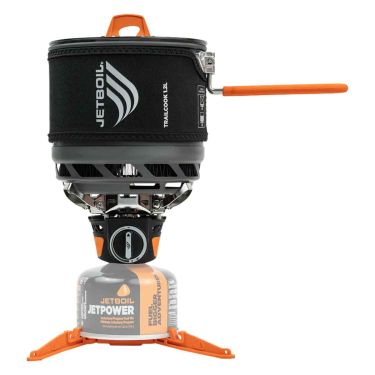
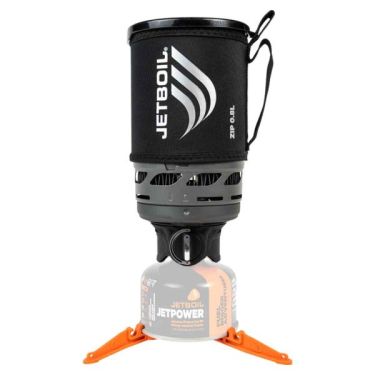
For heating water quickly, it is hard to beat a compact Jetboil-style stove. You can make a hot meal, coffee or tea in very little time. On board, you can pour hot water straight into a freeze-dried meal pouch, warm a shelf-stable meal in a water bath, or simply make yourself a hot drink while on watch. Its insulated design and protected burner also help reduce risks on a moving boat.
- The suspension kit: it keeps the stove level even when the boat heels. It makes cooking much easier.
- Capacity: if you are sailing solo, 0.8 to 1 litre is often enough. For two or more people, a larger model is much more convenient and can more easily hold pouches of shelf-stable meals.
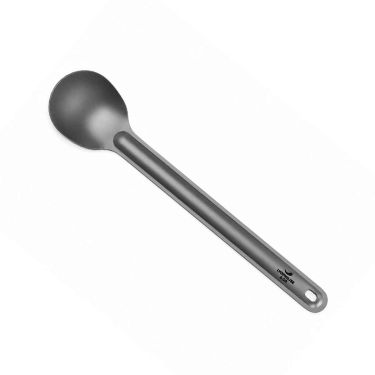
- A long-handled spoon: meal pouches are deep, and standard cutlery does not always reach the bottom. A long-handled titanium spoon weighs next to nothing and keeps sauce off your fingers.
To find the right one, read our guide to choosing a stove and explore our stoves and cooking equipment.
What about food?
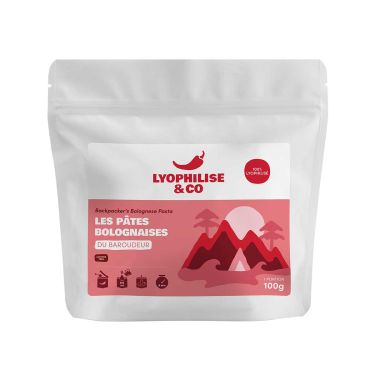
At sea, eating is not just about getting enough energy: it is also a moment of comfort, sometimes the best part of the day. Freeze-dried meals, shelf-stable meals, snacks, desserts and how much to pack: find our advice, including my own, in our complete guide to provisioning a boat. To find out what the professionals take on board, read what offshore racing skippers eat.
Small pieces of kit that make life on board easier
The head torch
At sea, some accessories seem unimportant until you need them and they are not there. A head torch is definitely one of them. It is essential for moving around on deck, checking a setting, preparing a meal, reading a chart or finding kit without waking everyone else.
Ideally, choose a head torch with a red light, especially if others are on board: it preserves night vision and avoids dazzling your crewmates. A Petzl Swift RL or Black Diamond Spot 400-R can be a good choice, depending on the brightness and battery life you need. And because a head torch can fall, get wet or go missing at the worst moment, carrying a small spare is always a good idea.
The knife
Every sailor knows you always need a blade on board. Cutting a line, opening a packet, making a repair or dealing with a problem… keep a knife or multi-tool within reach. Leatherman, Victorinox, Opinel: the choice mainly comes down to what you prefer. In a salty environment, care is essential: rinse the blade with fresh water now and then and dry it thoroughly to help it last longer.
Dry bags
Who has not opened their bag after a few days at sea, expecting clean clothes, only to find them damp, salty or smelling of the boat? To avoid that, dry bags are essential. Dividing your spare clothes between several bags helps you stay organised and protects everything that absolutely must stay dry: clothes, base layers, electronics, an e-reader, documents and first-aid supplies. Compressible packing cubes also save space and make it easier to find things in your bag, even in tight quarters.
My sailing gear checklist
- A sleeping bag with synthetic insulation
- An inflatable or foam sleeping mat, and a small pillow
- A compact stove with a suspension kit, and a long-handled spoon
- A head torch with a red light, plus a spare head torch
- A knife or multi-tool, rinsed regularly with fresh water
- Several dry bags for spare clothes, electronics and first-aid supplies
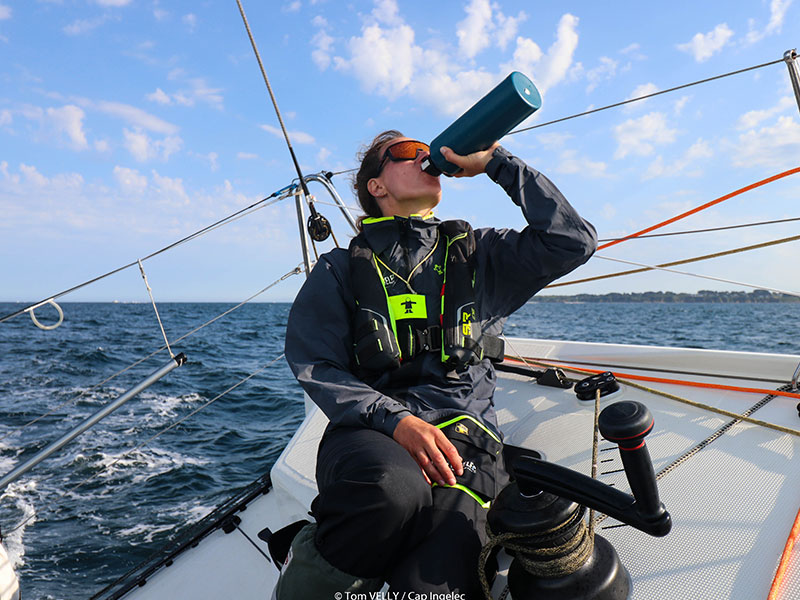
- A varied food supply, with snacks in your waterproof jacket pocket
The right gear is not a luxury
Sailing means accepting the unexpected. But the right preparation can also turn a tiring passage into a rewarding experience. Sleeping well, eating well, staying warm, keeping your kit dry and being able to rely on your gear: these are the details that make the difference between enduring a passage and being in control of it.
Fatigue, cold and damp can affect a skipper’s alertness and decisions. At sea, you respond better when you have slept somewhere dry, eaten a hot meal and kept your energy up. Whether you are spending a night at anchor, crossing the Atlantic, delivering a boat or racing offshore, choose reliable gear and accessories that genuinely make life easier.
FAQ: gear for sailing
Which sleeping bag should I choose for sleeping on a boat?
A sleeping bag with synthetic insulation handles moisture better than a down bag. Choose its comfort temperature for the areas you will be sailing through.
Why use a red-light head torch on a boat?
Red light preserves night vision and does not dazzle your crewmates. It lets you read a chart or adjust equipment at night without losing your bearings in the dark.
How do you cook on a heeling yacht?
Use a compact stove with a suspension kit or gimbal mount to keep it level. Freeze dried food only needs hot water, so there is less to handle.
How do you keep your belongings dry on board?
Divide your spare clothes and kit between several dry bags by category: clothing, electronics, documents and first-aid supplies.
We are here to help
At Freezedried & Co, we select our products with first-hand experience of the conditions at sea. Planning a passage and unsure what gear you need? Contact us on 02 97 87 23 73, by email, or visit our shop at 6 bis rue du sous-marin Vénus in Lorient.